
Lake Girard Pilot Deployment
A 24-hour proof-of-concept deployment designed to test the fundamental viability of solar-powered, AI-enabled trail cameras for multimodal activity detection in outdoor environments.
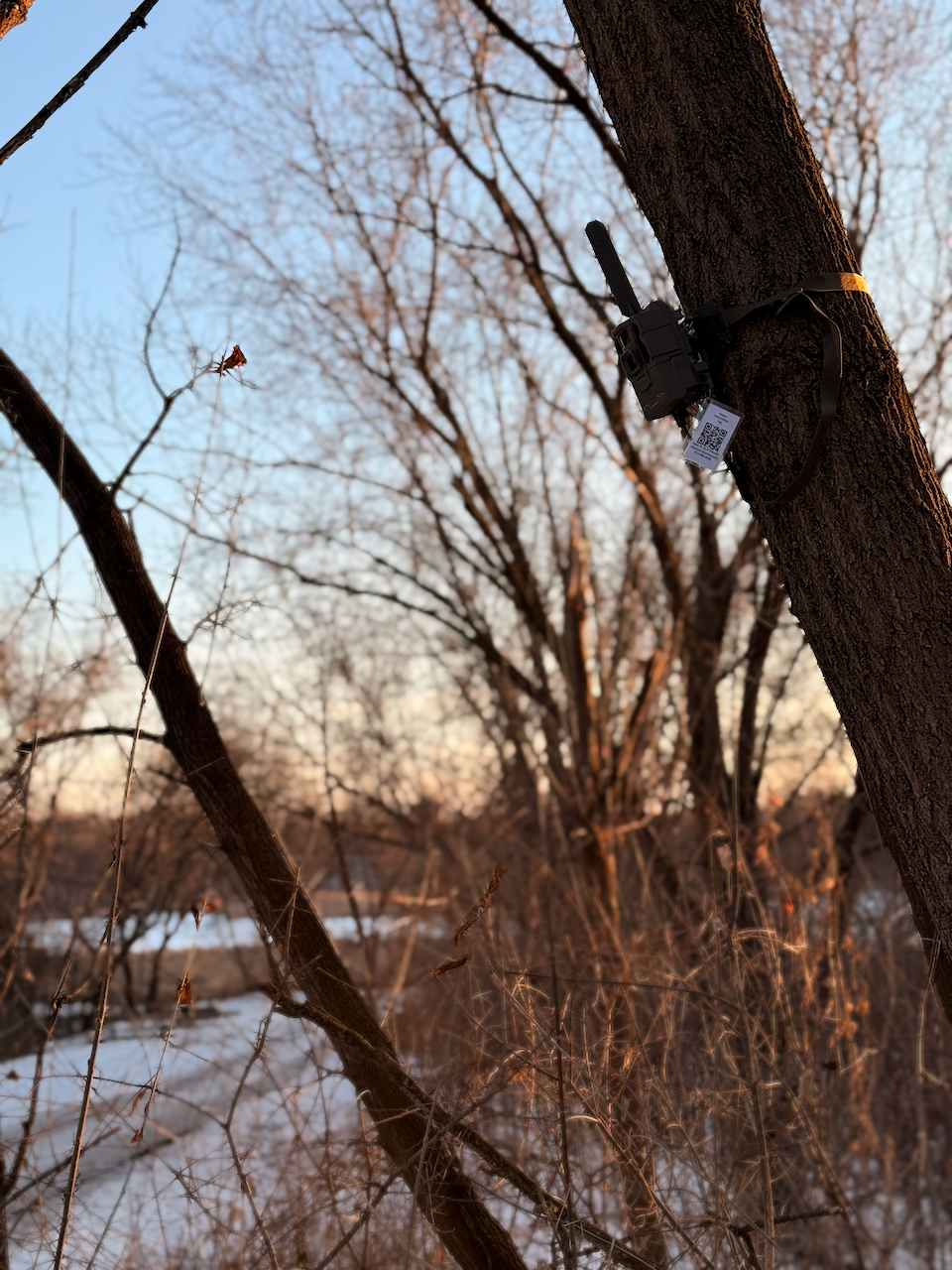
Deployment Overview
Deployment Parameters
Study Objectives
- •Validate end-to-end system operation in field conditions
- •Test multimodal detection capabilities across activity types
- •Assess solar power sufficiency for autonomous operation
- •Evaluate cellular data transmission reliability
- •Establish baseline detection accuracy metrics
First Deployment: This pilot served as Waypoint's initial field validation, testing core system capabilities before expanding to longer-duration studies like Hyland Lake Park Reserve.
Site Description
Lake Girard is a regional recreation area featuring multi-use trails, lake access, and parking facilities. Four cameras were deployed at strategic locations to capture diverse activity types: trail users (hikers and walkers), vehicle traffic, and wildlife across a 24-hour observation window.
Camera Deployment Map
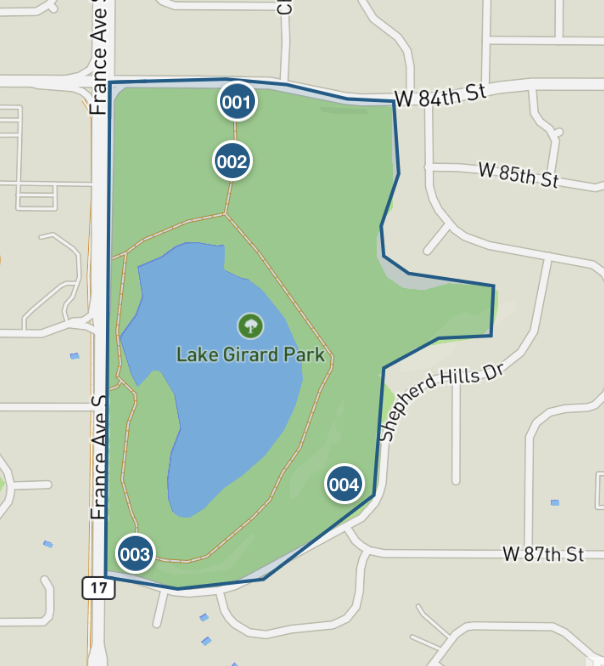
Four camera stations positioned across Lake Girard to monitor trail access points, parking areas, and lake activity.
Deployment Results
Detection Breakdown
Dashboard Activity Overview

Real-time activity visualization showing significant person detection activity spike on February 11 at 4:31 PM with 32 individuals detected.
Key Findings
Multimodal Detection Validated
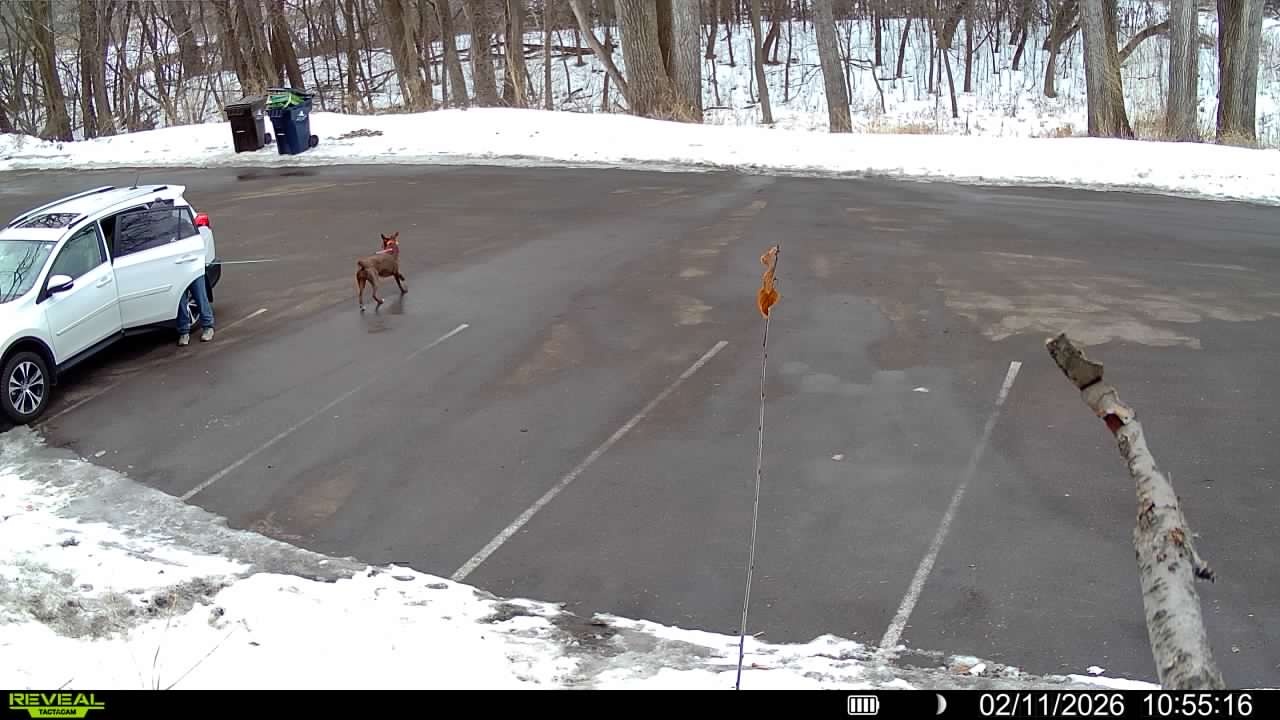
System successfully detected and classified multiple activity types including humans, animals, and vehicles—demonstrating core capability for diverse monitoring scenarios.
High Pedestrian Activity
Person detections comprised 72.6% of all activity, with significant accompanying dog traffic (23 detections), reflecting typical trail usage patterns.
Vehicle Traffic Baseline
20 vehicle detections (cars and trucks) captured at access points, providing initial data for parking and access management insights.
Data Transmission Success
All cameras transmitted detection data via cellular connection throughout the 24-hour period without interruption.
Camera Deployment
Camera Placement Strategy
Four solar-powered cameras were deployed across strategic monitoring locations: trail access points for pedestrian traffic, parking area for vehicle activity, and open areas to capture wildlife movement. Each camera operated autonomously on solar power with cellular connectivity for real-time data transmission.

Installation Photos
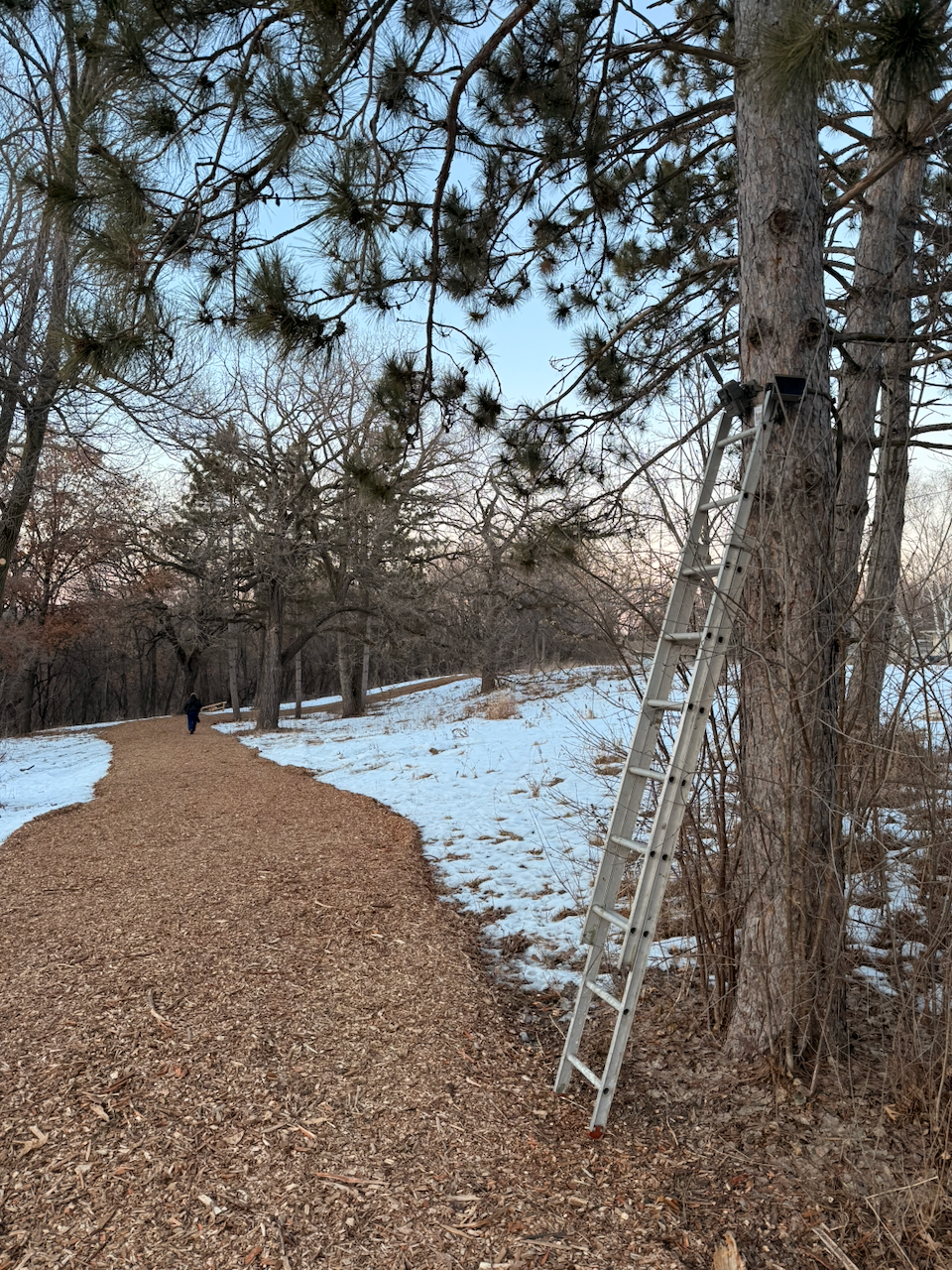
Solar-powered camera stations installed across Lake Girard in winter conditions, demonstrating cold-weather deployment capabilities.
System Performance
All 4 Cameras Operated Successfully
100% UptimeAll four camera stations maintained continuous operation throughout the 24-hour test period. Data transmission was reliable, solar power remained sufficient, and no hardware failures were observed.
Operational Metrics
Power & Environment
Key Learnings from the Pilot
As Waypoint's first field deployment, this pilot validated fundamental system capabilities and informed the design of subsequent studies. The following observations emerged from this initial 24-hour test.
1. Core System Feasibility Confirmed
All four cameras operated autonomously for 24 hours on solar power with reliable cellular data transmission. This validated the fundamental technical approach for remote, infrastructure-free trail monitoring.
2. Multimodal Detection Works in Practice
The AI successfully detected and classified multiple activity types (people, dogs, vehicles) from real-world trail camera images, demonstrating flexibility beyond single-purpose counters.
3. Longer Studies Needed for Algorithm Refinement
While initial detection performance was encouraging, the 24-hour timeframe provided limited data for algorithm tuning. This finding informed the design of extended deployments like the 14-day Hyland Lake study, which generated sufficient data to develop VisionAI v2 with 96%+ accuracy.
From Proof-of-Concept to Production
The Lake Girard pilot successfully validated the core technical approach, establishing confidence to proceed with more ambitious field studies. Insights from this deployment directly informed subsequent work.
What Came Next
Following this initial success, Waypoint conducted a 14-day deployment at Hyland Lake Park Reserve in partnership with Three Rivers Park District. That extended study:
- •Expanded to 7 camera stations across diverse trail environments
- •Generated 15,198 processed images and 9,283 detections
- •Provided real-world data that informed the development of VisionAI v2
- •Demonstrated winter operation capabilities and identified solar panel maintenance considerations