
Autonomous Operation
Install once. Collect data continuously.
Waypoint monitoring systems are designed for long-term autonomous operation in outdoor environments. Solar-powered cameras capture imagery in the field and transmit it over cellular networks, allowing recreation data to flow directly into the Waypoint platform without manual data retrieval.
Once installed, monitoring stations operate continuously for months at a time, eliminating the need for frequent site visits to retrieve memory cards or download data.
Set It and Forget It Monitoring
Traditional recreation monitoring often requires repeated field visits to retrieve data.
Infrared trail counters and camera traps frequently rely on SD cards or local storage that must be manually collected and processed.
Waypoint eliminates this operational burden.
Each monitoring station automatically captures images, transmits them to the cloud, and processes them through the AI detection pipeline. Activity data appears in the Waypoint platform without any manual intervention.
For park managers and researchers, this means:
- •Fewer field visits
- •Continuous data collection
- •Faster access to recreation insights
- •Lower long-term operational overhead
Solar-Powered Rechargeable Batteries
All Waypoint monitoring systems come with solar-powered rechargeable battery systems designed for continuous autonomous operation in remote outdoor environments.
Each deployment includes a solar panel and LiFePO4 battery system. Solar generation replenishes battery capacity during daylight hours, while energy storage allows cameras to operate through nights and extended cloudy periods.
Waypoint monitoring stations operate independently of grid power and can sustain continuous operation for months with minimal maintenance.
Power System Components
Monocrystalline Solar Panels
High-efficiency solar panels generate power from daylight to charge battery systems and support continuous camera operation.
LiFePO4 Battery Systems
Lithium iron phosphate batteries provide reliable energy storage with extended cycle life and stable performance across temperature extremes.
Intelligent Charge Controllers
Charge management systems optimize battery health and prevent overcharging while maintaining operational reliability during low-light periods.
Performance in Harsh Conditions
Solar-powered systems in outdoor environments face challenges including short winter days, extended cloudy periods, and low sunlight availability. Despite these conditions, Waypoint systems have demonstrated sustained battery performance across multiple pilots.
The charts below show real battery level data from deployed Waypoint monitoring stations operating in winter conditions. These systems continued transmitting data continuously without battery failures, even during periods of reduced solar generation.
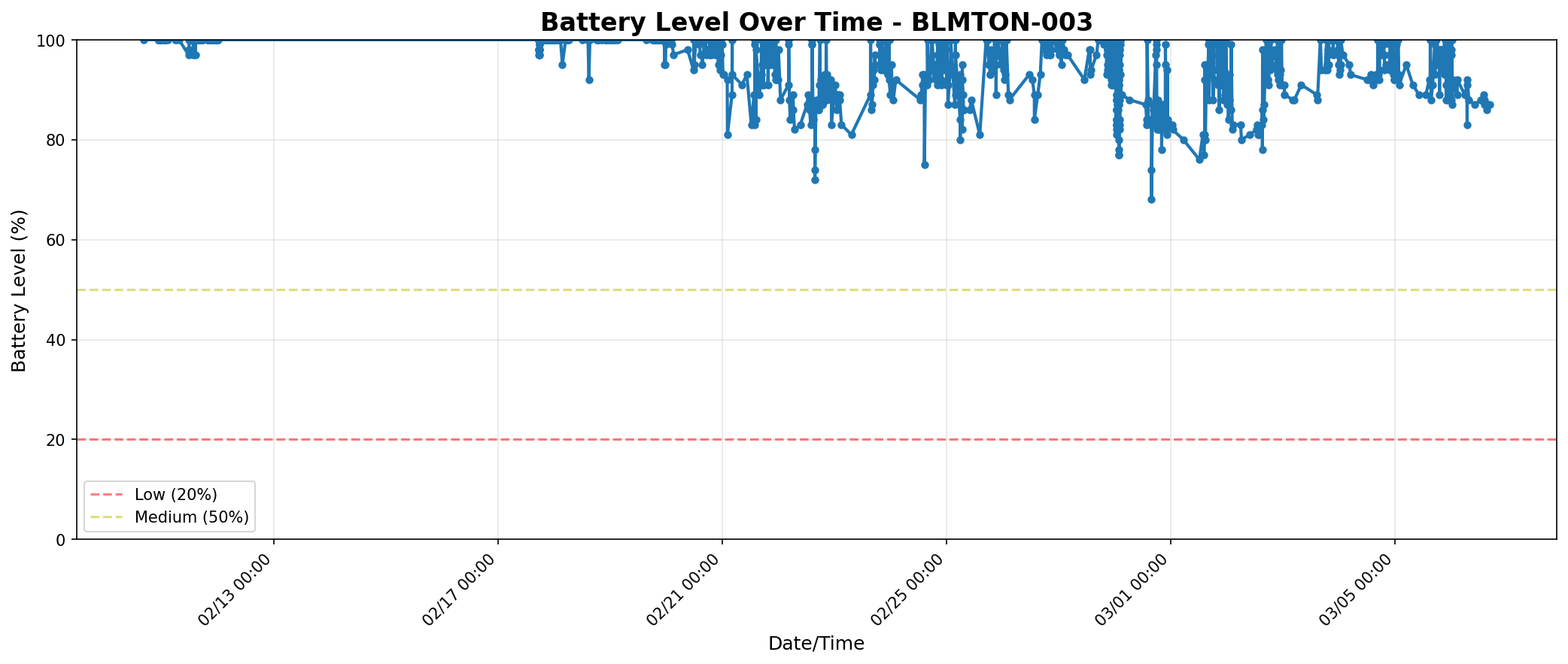
Station BLMTON-003: Battery levels remained above 80% throughout late winter deployment period
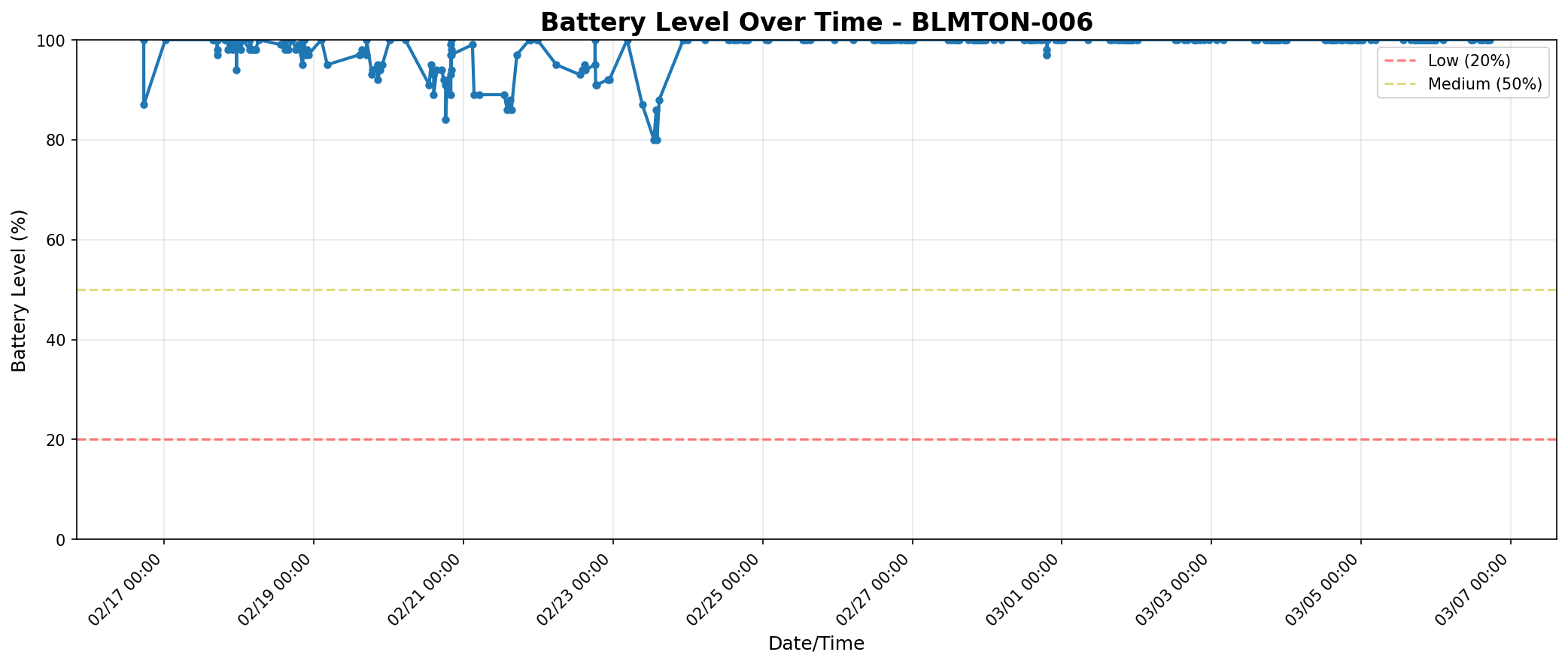
Station BLMTON-006: Battery maintained near-full charge across extended deployment despite winter conditions
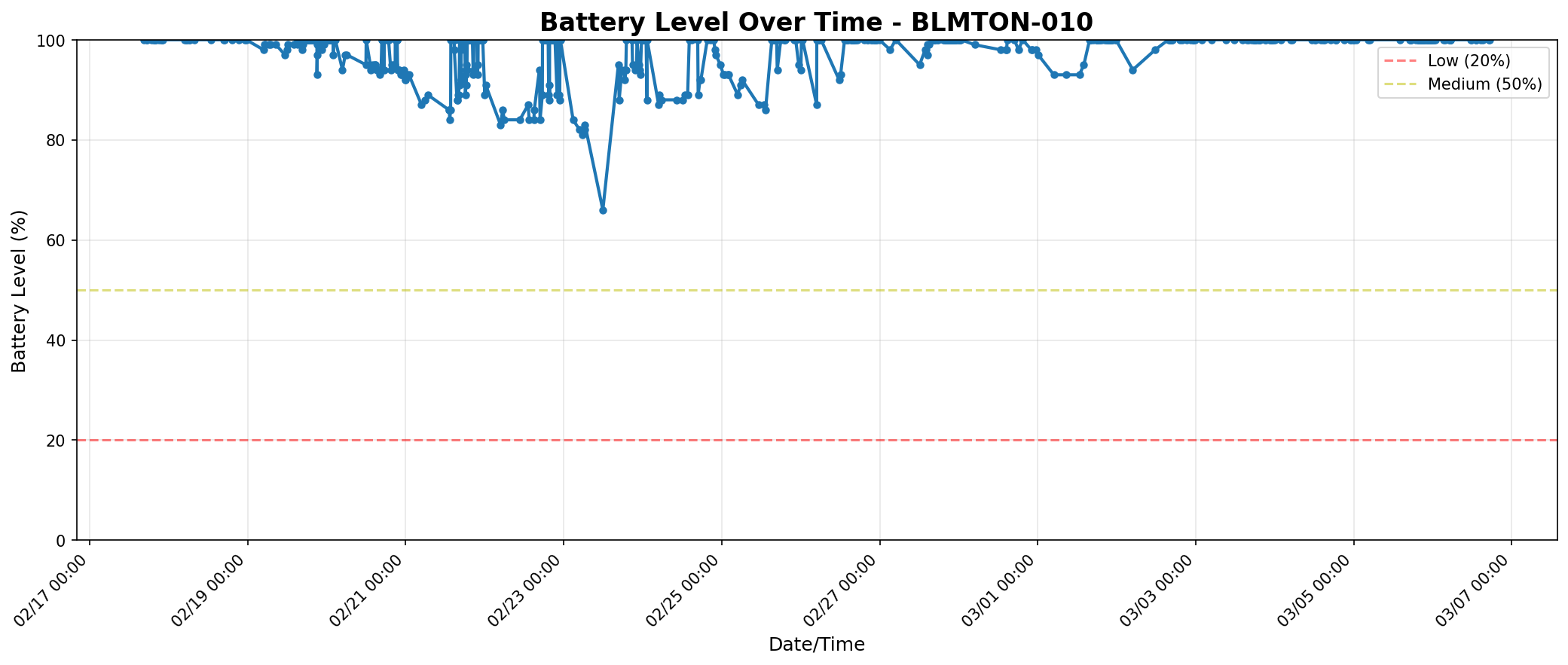
Station BLMTON-010: Consistent battery performance maintained throughout winter monitoring period
These deployments validate the reliability of solar-rechargeable battery systems for long-term outdoor monitoring. Even in low-sunlight winter conditions, Waypoint systems sustained continuous operation without manual intervention or battery replacement.
The operational outcome: long-duration deployments in remote locations without reliance on grid infrastructure, proven across multiple field pilots in diverse environmental conditions.
Cellular Data Transmission
All Waypoint monitoring systems include built-in cellular connectivity with high-powered antennas designed for outdoor deployments.
Captured images are uploaded automatically to the Waypoint cloud platform over cellular networks, where they are processed by the computer vision pipeline. Recreation data becomes available in the analytics dashboard without requiring physical retrieval.
This connectivity allows monitoring stations to operate without local infrastructure such as Wi-Fi networks or wired internet connections.
Why Cellular Works in Outdoor Environments
Over the past five years, cellular network coverage has expanded dramatically across the United States. Even in remote parks and wilderness areas, cellular connectivity is often more reliable than expected.
Waypoint systems utilize high-powered cellular antennas designed specifically for outdoor applications. These antennas can pick up signals in areas where consumer devices may struggle, enabling reliable connectivity even in locations that appear to have marginal cell service.
Operational Benefits
- •No SD card collection
- •No manual downloads
- •Remote monitoring capability
- •Real-time data availability
- •No dependency on local network infrastructure
T-Mobile Coverage
Waypoint systems are deployed on T-Mobile's nationwide network. You may be surprised how many outdoor locations have sufficient cellular connectivity to support continuous image transmission.
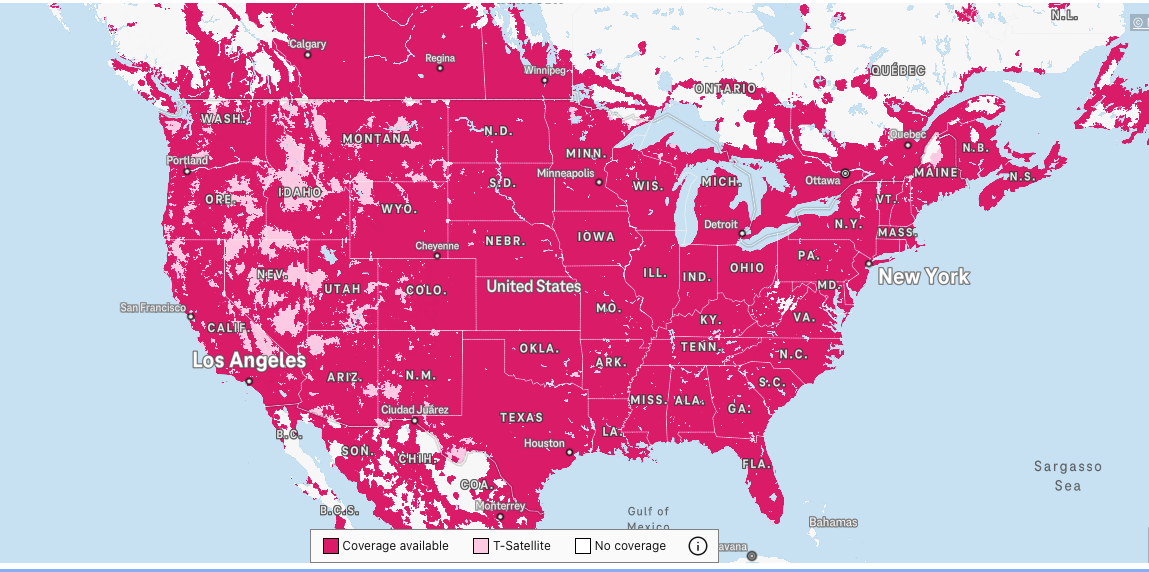
T-Mobile coverage extends across most park systems and outdoor recreation areas. View the full coverage map at t-mobile.com/coverage/coverage-map
In practice, Waypoint deployments have successfully operated in diverse environments ranging from suburban parks to remote wilderness trails. For most outdoor recreation applications, cellular connectivity is no longer a limiting factor.
Remote Configuration
Monitoring stations can be configured remotely through the Waypoint platform.
This allows operators to adjust system behavior without returning to the physical site.
Examples of remote adjustments include:
- •Capture frequency
- •Monitoring schedules
- •Detection settings
- •Activity classification parameters
Remote configuration reduces the need for maintenance trips and allows monitoring strategies to evolve as projects progress.
Designed for Outdoor Environments
Waypoint systems are designed for long-term deployment in harsh outdoor environments.
Enclosures and mounting systems are built to withstand:
- •Rain
- •Snow
- •Dust
- •Temperature swings
- •Prolonged sun exposure
Systems are commonly deployed on trees or posts along trails, access points, and park infrastructure with minimal impact.
Rapid Field Deployment
Waypoint monitoring stations can typically be installed within a few hours.
Because the system does not require grid power or network infrastructure, installations can be placed directly at optimal monitoring locations.
This flexibility allows agencies to deploy monitoring networks across large park systems without infrastructure constraints.
Typical deployment locations include:
- •Trailheads
- •River access points
- •Parking areas
- •Trail corridors
Operational Reliability
Waypoint monitoring systems are designed to operate continuously across long study periods.
Typical deployments:
- •Remain active for multiple months
- •Transmit data daily
- •Require minimal maintenance
Autonomous operation allows monitoring networks to scale across many sites without requiring frequent field visits. Operational efficiency is a major advantage for agencies responsible for large park systems.