
High-Accuracy VisionAI Detection
Measuring recreation activity with computer vision.
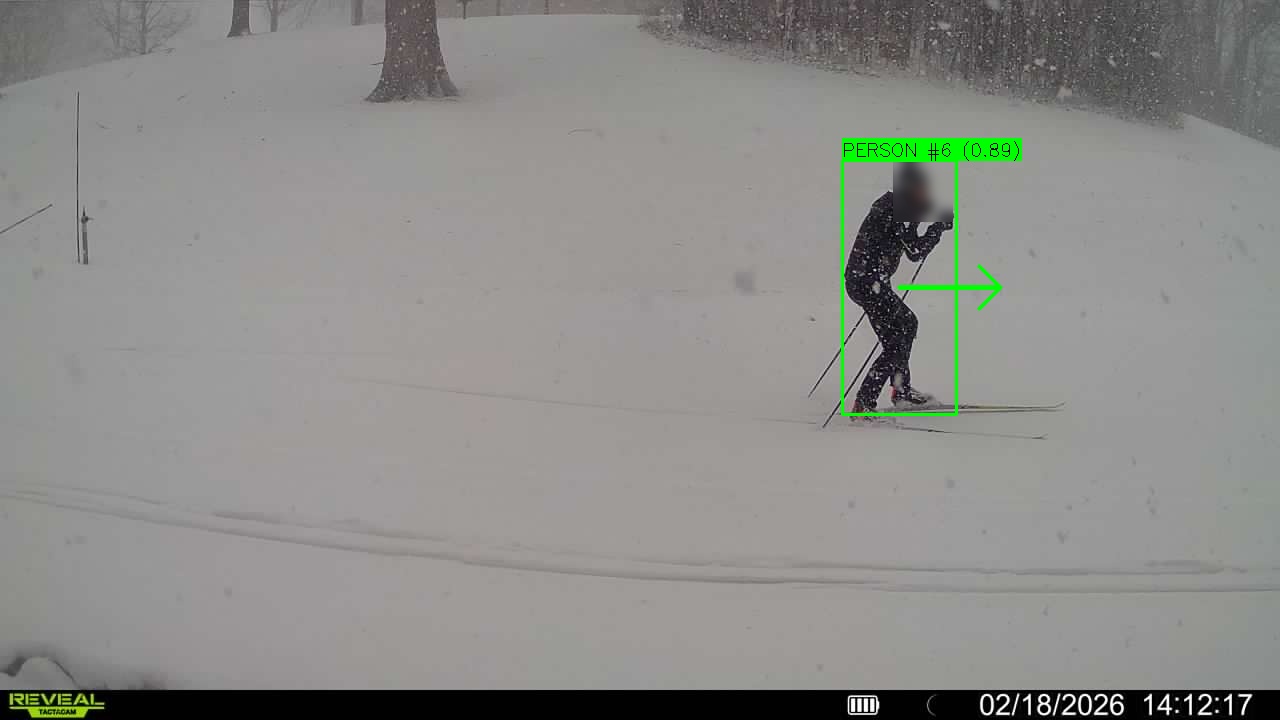
Waypoint uses computer vision models trained specifically for outdoor recreation environments to detect people and other activity types directly from imagery.
Unlike traditional infrared counters that only measure beam interruptions, VisionAI systems analyze the visual scene itself. This allows the platform to identify individual subjects, distinguish between activity types, and filter out non-human events.
The result is significantly more reliable recreation telemetry in complex real-world environments.
The Limitations of Infrared Counters
Infrared trail counters detect activity when an invisible beam between two sensors is interrupted.
While this approach is simple and inexpensive, it introduces several well-known sources of error in outdoor environments.
IR counters cannot see what triggered the sensor. They only detect beam interruption.
This leads to several systematic counting errors.
Failure Mode: Groups and Stacked Subjects
When multiple people pass through an infrared beam close together, the sensor may only register a single interruption.
Examples include:
- •Families walking together
- •Groups of hikers
- •Cyclists riding closely spaced
- •Crowded trailheads
In these situations, multiple visitors can be recorded as a single count.
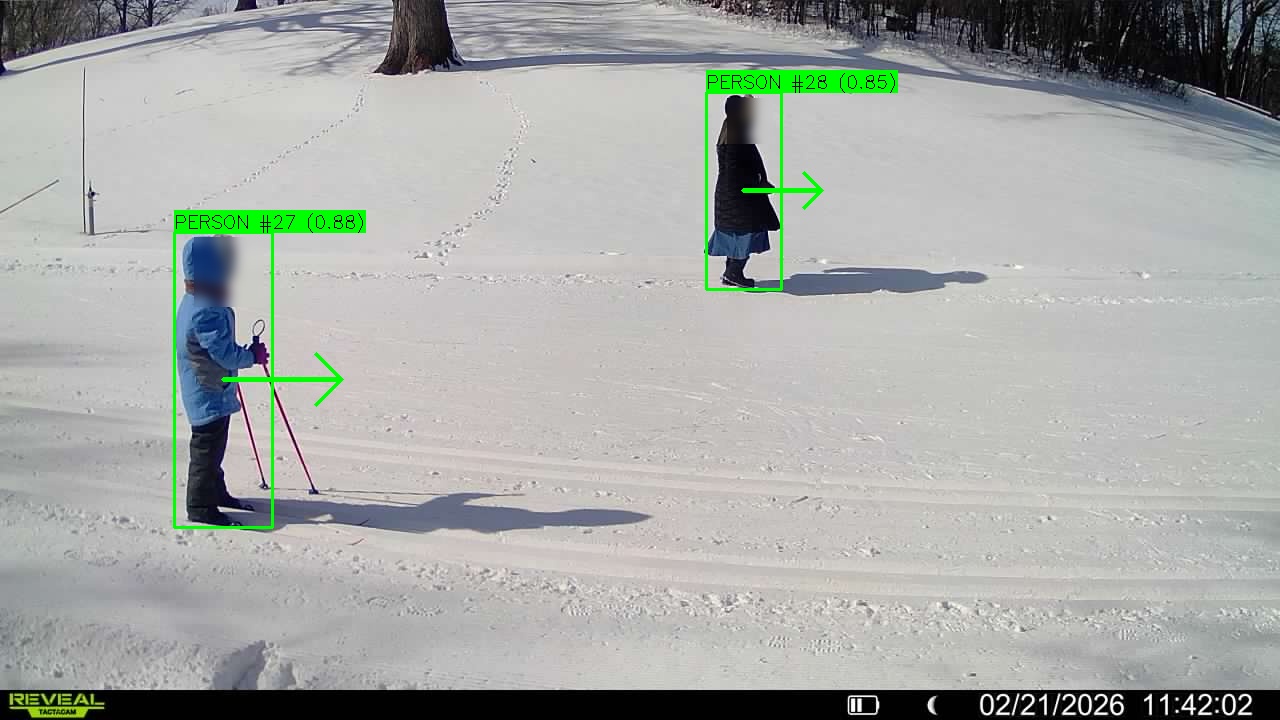
Vision-based systems detect each individual subject within the frame, allowing accurate counts even when people overlap visually.
Failure Mode: Animals and False Positives
Infrared counters trigger whenever something crosses the beam.
This includes:
- •Wildlife
- •Dogs
- •Falling branches
- •Blowing vegetation
Because the sensor cannot classify the object, these events are often counted as people.
VisionAI systems analyze the visual scene and classify detected objects.
This allows the system to filter out non-human events and prevent false-positive counts.
The system uses multi-class object detection models to distinguish between people, animals, vehicles, and other objects.
Failure Mode: Subject Noise
Real-world recreation activity rarely occurs in perfectly straight motion.
Visitors often:
- •Pause on trails
- •Stop to talk
- •Let children run ahead
- •Walk back and forth briefly
- •Linger near trailheads
Infrared sensors may record multiple counts as the same person repeatedly interrupts the beam.
This type of counting error is known as subject noise.
Subject noise can significantly inflate visitation estimates in busy recreation areas.
Subject Noise Filtering (SNF)
Waypoint developed a system called Subject Noise Filtering (SNF) to address this problem.
SNF uses computer vision to identify unique subjects as they move through the camera field of view.
Rather than counting beam interruptions, the system tracks detected individuals across multiple frames and determines whether detections belong to the same subject.
This allows the platform to distinguish between:
- •Repeated movement by the same person
- •Separate visitors entering the scene
The result is a much more accurate estimate of unique visitation events.
Learn more about SNF →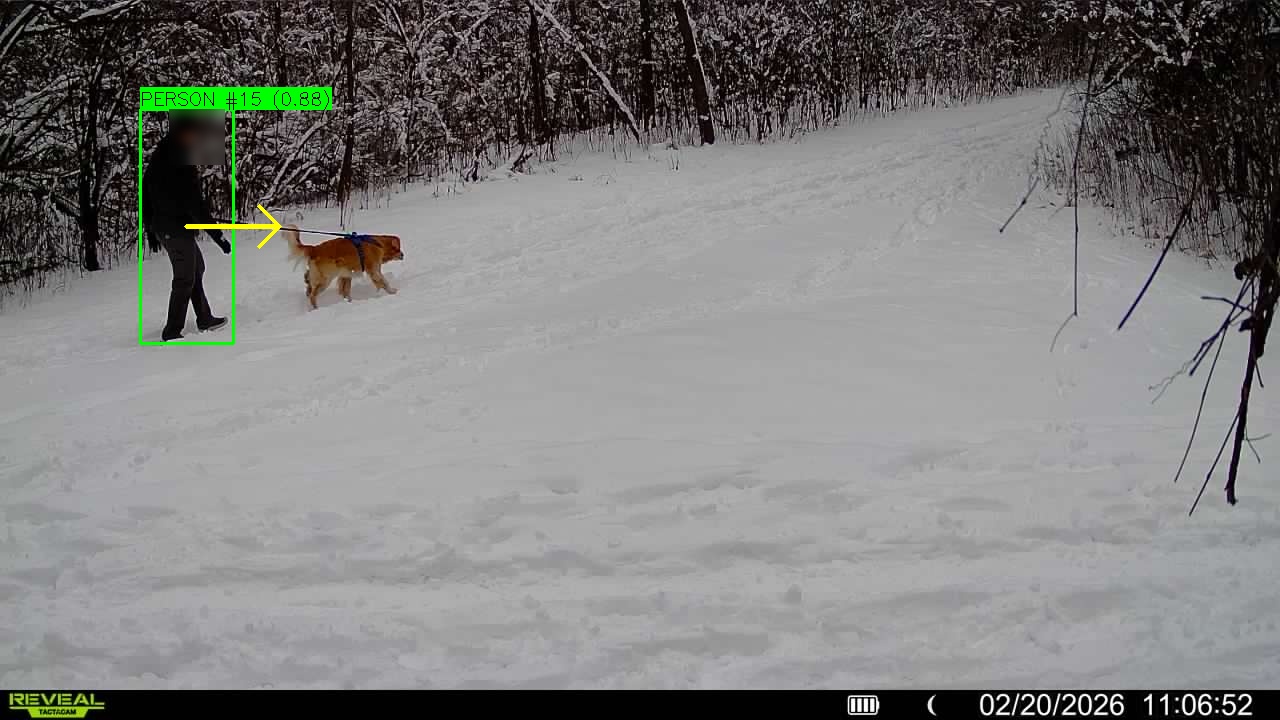
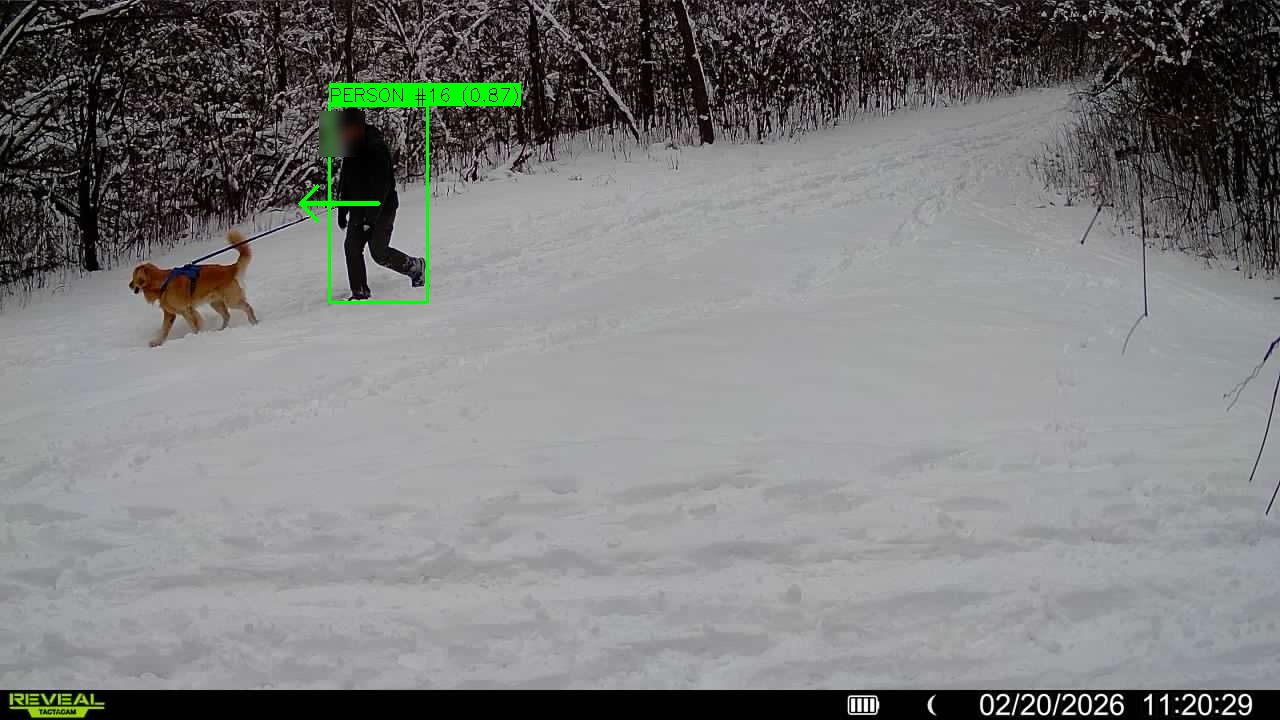
Subject Noise Filtering tracks the same individual across multiple frames and different directions, preventing duplicate counts.
Validated in Challenging Environments
The VisionAI system and SNF algorithms have been evaluated across a range of real-world recreation conditions.
These environments include:
- •Night-time monitoring
- •Snowstorms
- •Crowded trailheads
- •Bright sunlight conditions
- •Mixed recreation modes
- •Dense vegetation backgrounds
Testing across these environments demonstrates that vision-based counting can remain reliable even under conditions that traditionally cause significant error for infrared counters.
Bright Sunlight
Multi-subject detection with directionality tracking
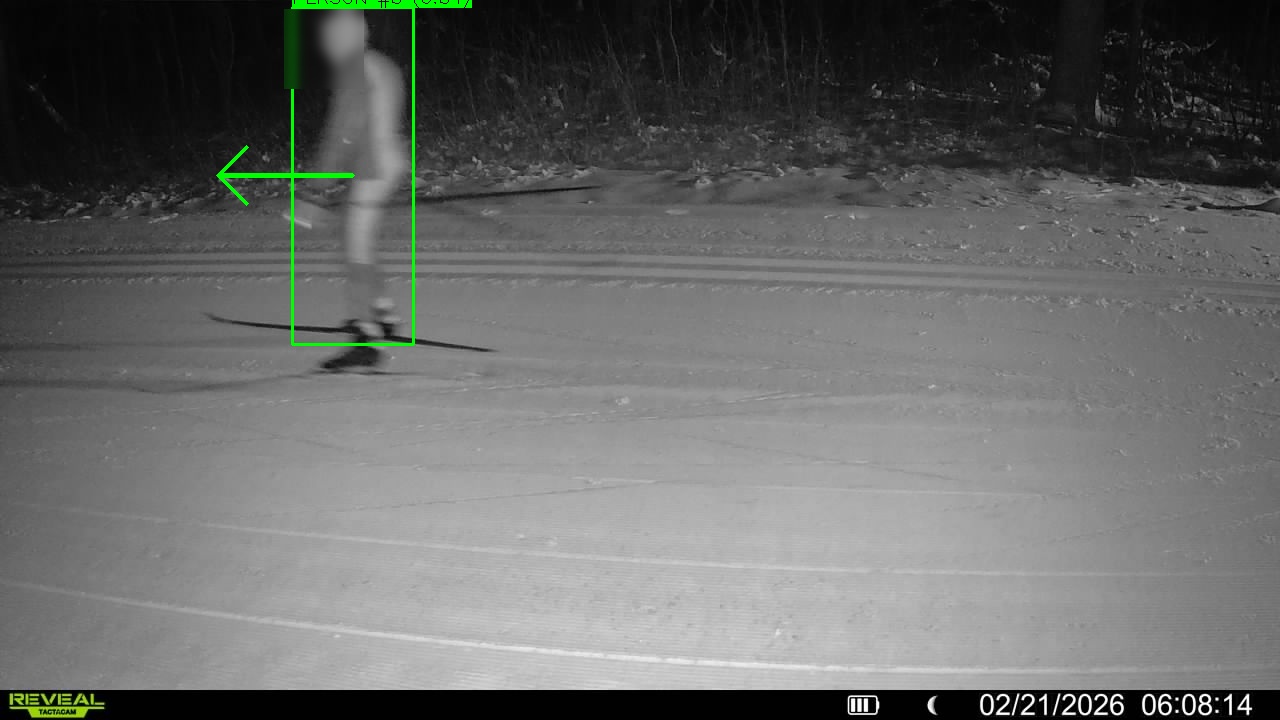
Night Monitoring
Accurate detection even with motion blur and darkness
Overcast Conditions
Multi-class detection in flat gray lighting
Multi-Modal Activity Detection
Because VisionAI analyzes the full visual scene, the system can distinguish between different types of activity.
Examples include:
- •People
- •Cyclists
- •Dogs
- •Wildlife
- •Vehicles
This allows recreation telemetry to include richer activity information rather than just a single total count.
This capability also improves count accuracy by preventing false triggers from being recorded as visitors.
Transparent and Auditable Counts
Another advantage of vision-based counting is transparency.
Every detection event can be traced back to the original image.
Users can audit the detections that produced each count, allowing agencies and researchers to verify data quality.
This level of transparency is not possible with beam-based sensors.
Vision-Based Recreation Telemetry
Computer vision enables recreation monitoring that is both more accurate and more informative than traditional counters.
By detecting and classifying individual subjects directly from imagery, Waypoint systems provide reliable counts even in complex outdoor environments.
Combined with Subject Noise Filtering and multi-modal detection, VisionAI allows recreation telemetry to reflect how people actually use parks and trails.