
Designed, built, and tested in Minnesota by engineers who work outdoors
Waypoint Telemetry builds cellular, solar-capable AI cameras that measure how people use trails, parks, courts, and public land. The hardware is engineered and assembled at our manufacturing and lab facility in Bloomington, Minnesota, by a founder-led team with a track record in regulated electronics and outdoor technology.
- Headquarters
- Bloomington, Minnesota
- Facility
- Manufacturing and lab, in-house
- Engineering team
- 4 engineers, 3 disciplines
- Connectivity
- Cellular on every product
- Wireless partner
- F3 Wireless, Minneapolis
Why Waypoint exists
Technology is coming to the outdoors. We want it done with care.
Technology and outdoor recreation are becoming more integrated every year, through mapping apps, connected sensors, and the analytics land managers now rely on. Waypoint exists to lead that integration responsibly: to make the outdoors easier to steward and more enjoyable to use, never more watched or more crowded.
That is why every Waypoint camera captures still images rather than video, produces aggregate counts rather than identities, and is labeled in plain sight instead of hidden. Our founder proved the same approach with TroutRoutes, and it is the standard for everything we build. Read more about the thinking behind Waypoint and our privacy-first design.
- Still images only, never continuous video
- Aggregate activity data, no facial recognition
- Non-covert, labeled units with a public information tag
- Data delivered to the agencies that manage the land
Founder
Zachary Pope: medical-device embedded electronics, then TroutRoutes, then Waypoint
Full founder profile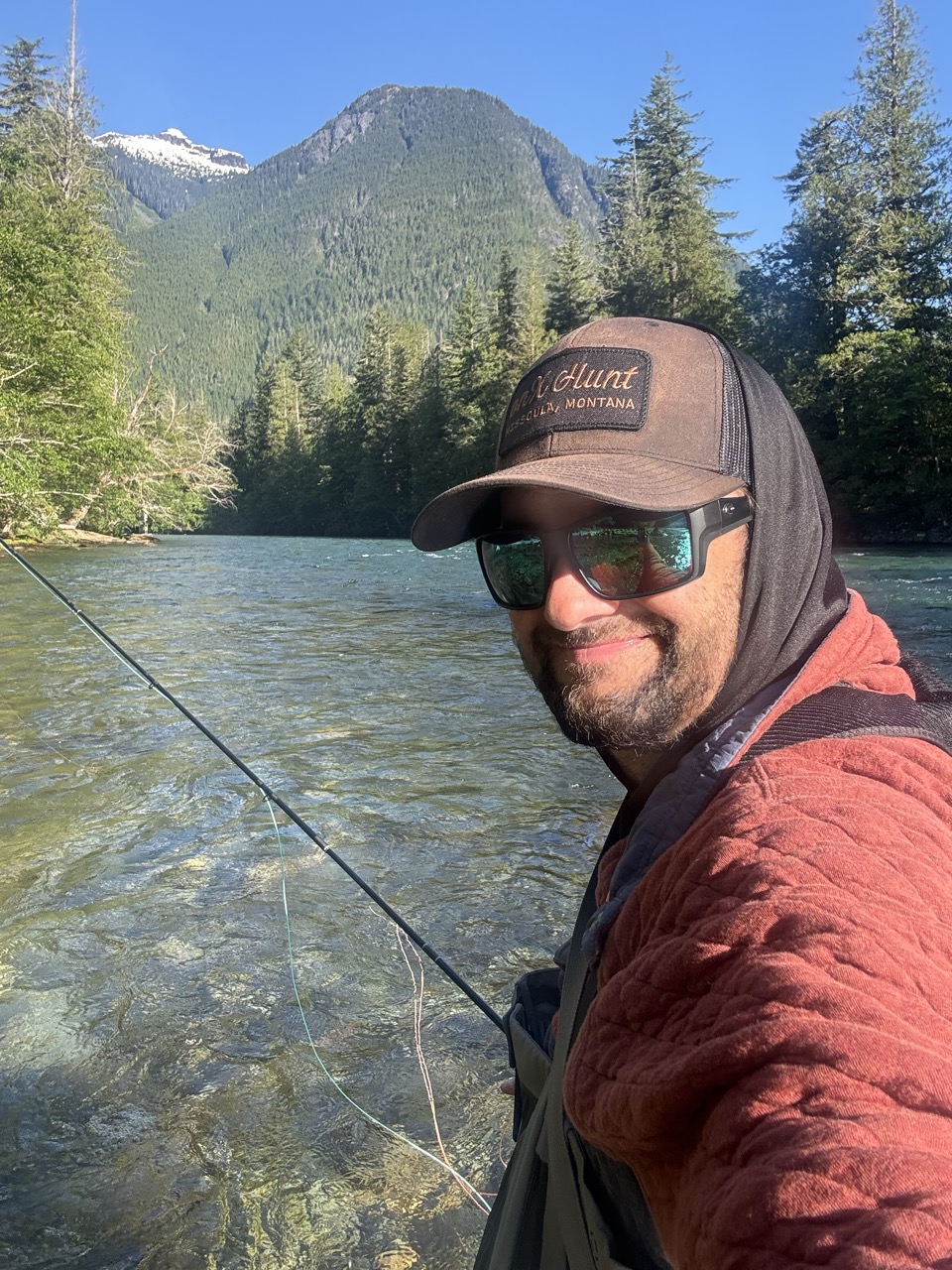
Zachary Pope has spent his career building technology for two demanding audiences: clinicians who depend on medical electronics, and outdoors people who depend on accurate information about public land and water. Waypoint is the product of both.
Before Waypoint, he founded TroutRoutes, the fly-fishing mapping platform that charted trout streams, access trails, easements, and parking across the United States. He built the company from a solo project in 2019 into the category leader, and onX acquired it in March 2024 as the foundation of its fishing business. Earlier, he led embedded electronics development as an engineering director in the medical device industry, where he learned to design hardware that is validated, documented, and trusted in the field. He holds a B.S. in Electrical Engineering and an M.S. in Management of Technology, both from the University of Minnesota, and has served on the board of the Twin Cities chapter of Trout Unlimited.
Outside of work, he has spent more than a decade in the outdoors and in conservation: nearly ten years as a Trout Unlimited member, a term on the Twin Cities chapter board, and more than 20 fly fishing expos worked across the country for TroutRoutes. That combination shapes how Waypoint works: image-validated data instead of unverifiable counts, hardware built to survive Minnesota winters, and a product designed around the questions land managers actually ask.
Medical devices
Embedded electronics, engineering director
Zachary began his career designing embedded electronics for the medical device industry, where hardware has to work every time and every design decision is documented, tested, and defended. He rose to engineering director, leading teams shipping regulated electronic products.
2019 – 2024
Founder, TroutRoutes
In 2019 he left that role to found TroutRoutes, a mapping platform for river and stream anglers. Under his leadership the company mapped more than 50,000 trout streams across all 48 contiguous states, along with access trails, public land, easements, and parking, and became the leading fly-fishing mapping app in the United States.
March 2024
TroutRoutes acquired by onX
onX, the outdoor navigation company behind onX Hunt and onX Backcountry, acquired TroutRoutes to anchor its entry into fishing. Zachary and his Twin Cities team joined onX through the acquisition.
Today
Founder, Waypoint Telemetry
Waypoint brings the two halves of that background together: rigorous embedded hardware engineering and a deep, working understanding of how people actually use trails, water, and public land.
Building TroutRoutes: from a Driftless-area problem to 50,000 mapped streams
TroutRoutes started in 2019 with a problem Zachary had as an angler in Minnesota's Driftless Area: information about where to fish was scattered across atlases, county property maps, state GIS layers, and stream gauges, with no single tool built for anglers. He set out to consolidate all of it into one map.
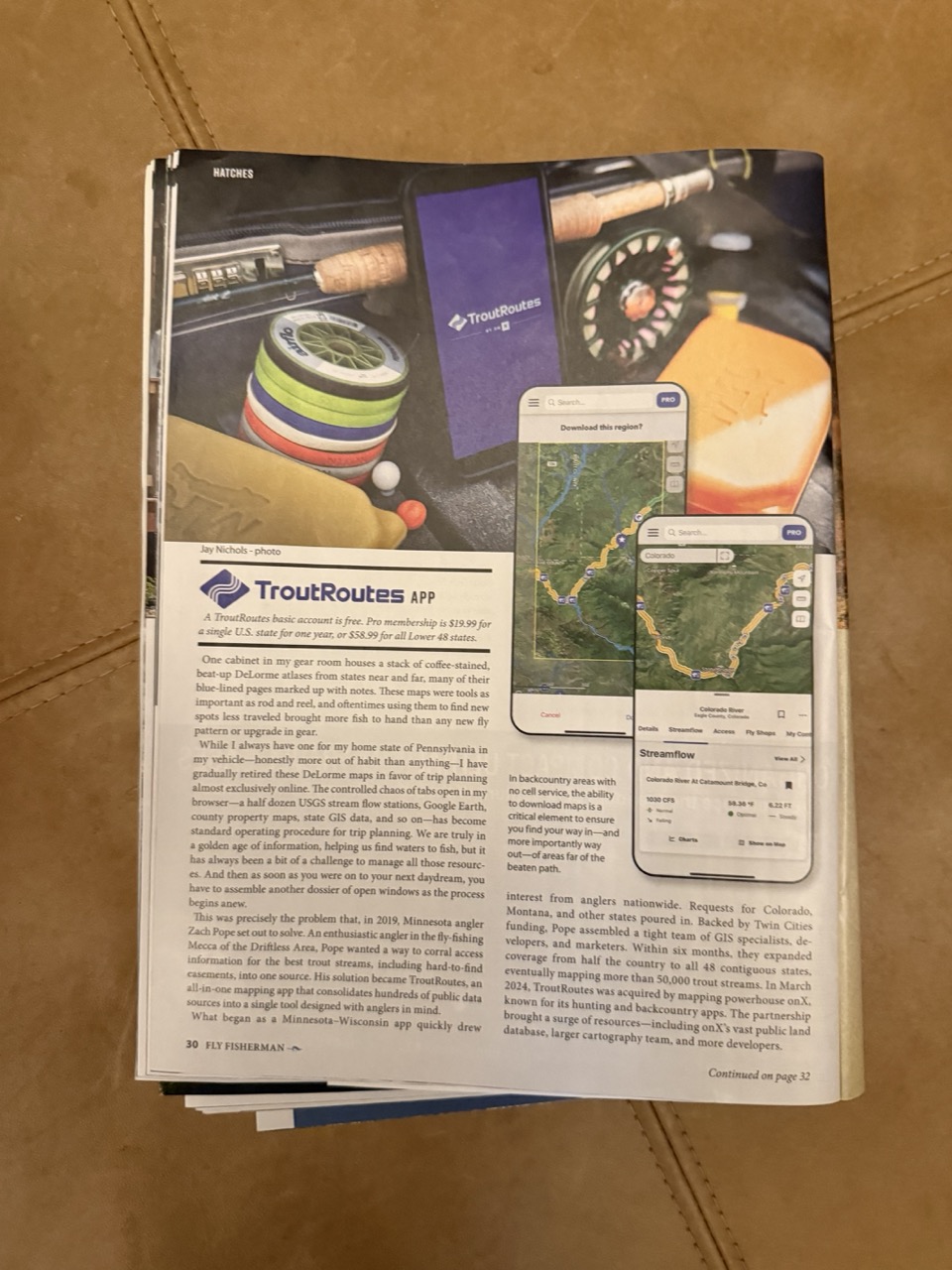
Backed by Twin Cities funding, he assembled a small team of GIS specialists, developers, and marketers. Within six months the app grew from a Minnesota and Wisconsin product to coverage of all 48 contiguous states, and it eventually mapped more than 50,000 trout streams with access points, public land, easements, and real-time flow data. Fly Fisherman magazine covered the app as the field's all-in-one mapping tool.
In March 2024, onX acquired TroutRoutes to anchor its entry into fishing. The same instincts carry into Waypoint: consolidate scattered field data into one trustworthy source, and build it for the people who manage and use public land.
Facility
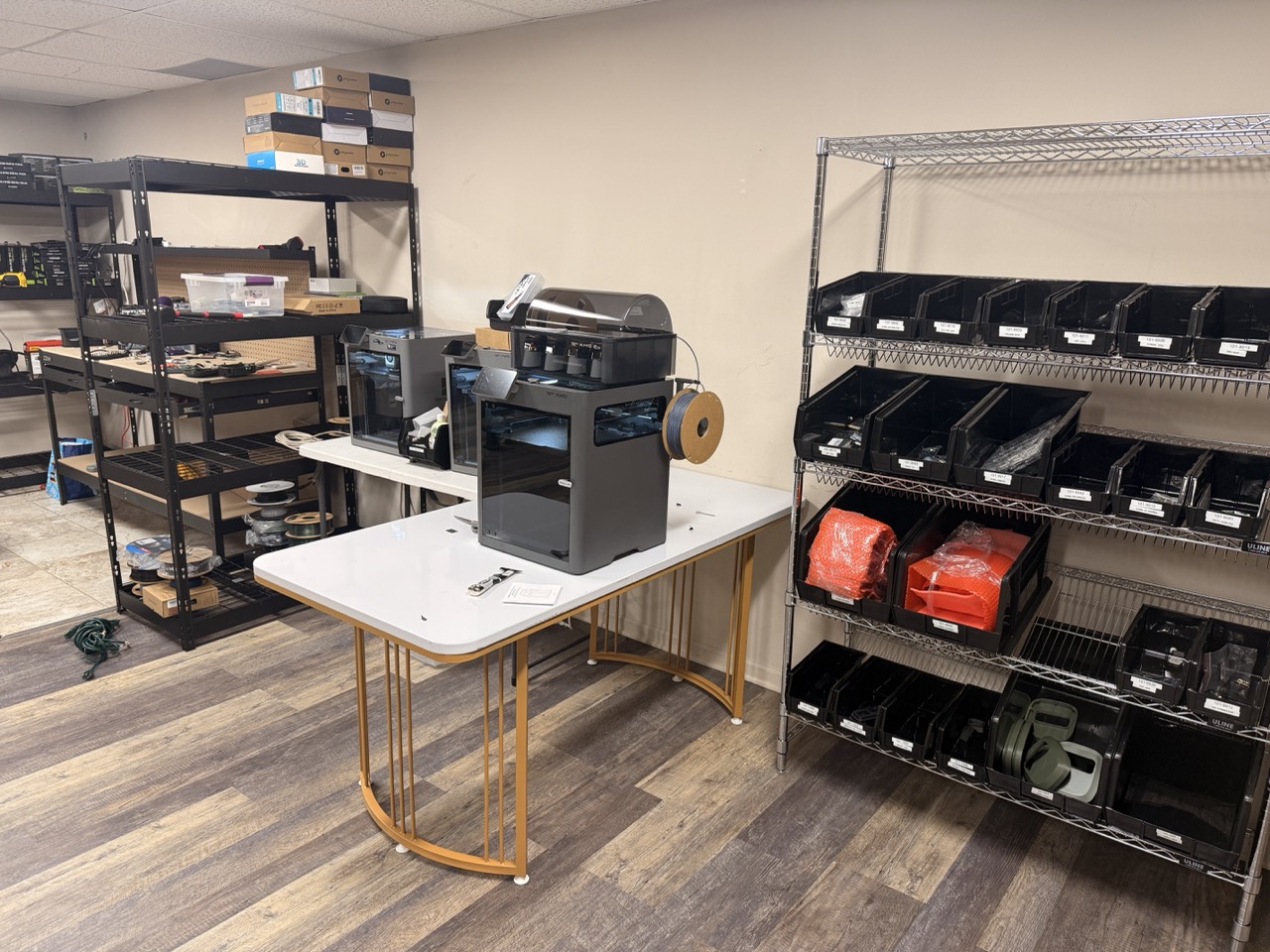
Manufacturing and lab facility in Bloomington, Minnesota
Waypoint designs, assembles, and tests VisionAI One at its own facility in Bloomington, Minnesota. Keeping engineering, assembly, and testing under one roof means a design change made on the bench in the morning can be on a test rack the same afternoon and on a trail the same week.
The lab is built around the conditions our cameras face in the field: sub-zero temperatures, snow-covered solar panels, dense tree cover, and marginal cellular signal. Every unit is powered up, connected over cellular, and inspected here before it ships to a customer site.
What happens in the lab
- Enclosure and mount prototyping, fit checks, and design iteration
- Circuit board bring-up, firmware development, and power profiling
- Weather-seal, temperature, and vibration testing on assembled units
- Solar and battery endurance testing across seasonal light conditions
- Cellular connectivity validation before any unit ships
- Final assembly, quality inspection, and deployment kit staging
We design and manufacture our own electronics
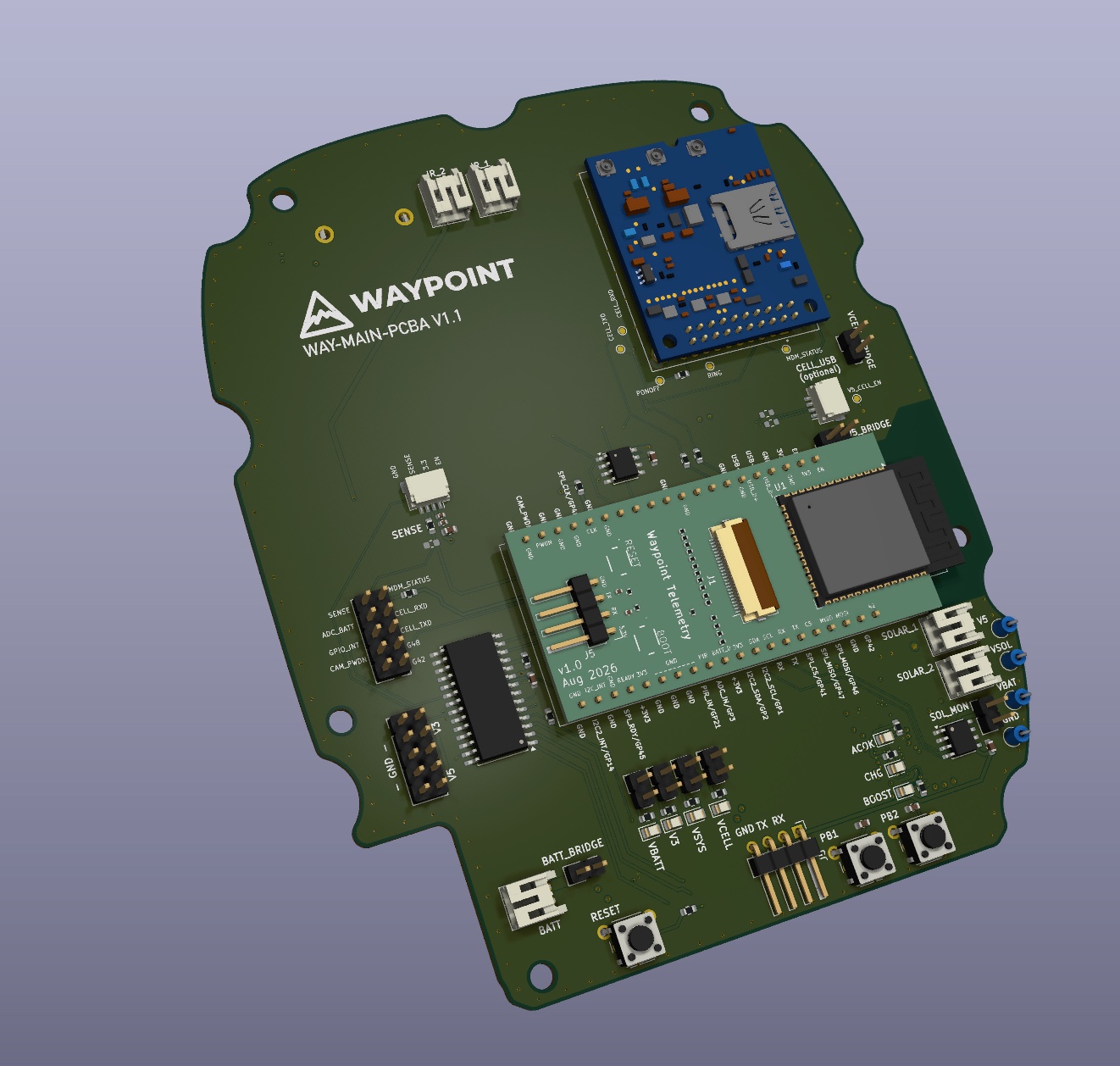
VisionAI One is not a repackaged trail camera. The main board is a Waypoint design, laid out by our electrical engineering team and revised through numbered board revisions as field data comes back. It carries the cellular modem, the camera processing module, battery management, and dual solar inputs on a single assembly sized to the enclosure.
Owning the board means owning the power budget. Sleep currents, charge behavior, and modem duty cycles are measured on our bench, not taken from a supplier datasheet, which is how the system stays online through the dark half of a Minnesota winter. Read more about autonomous operation.
Rapid prototyping, in-house
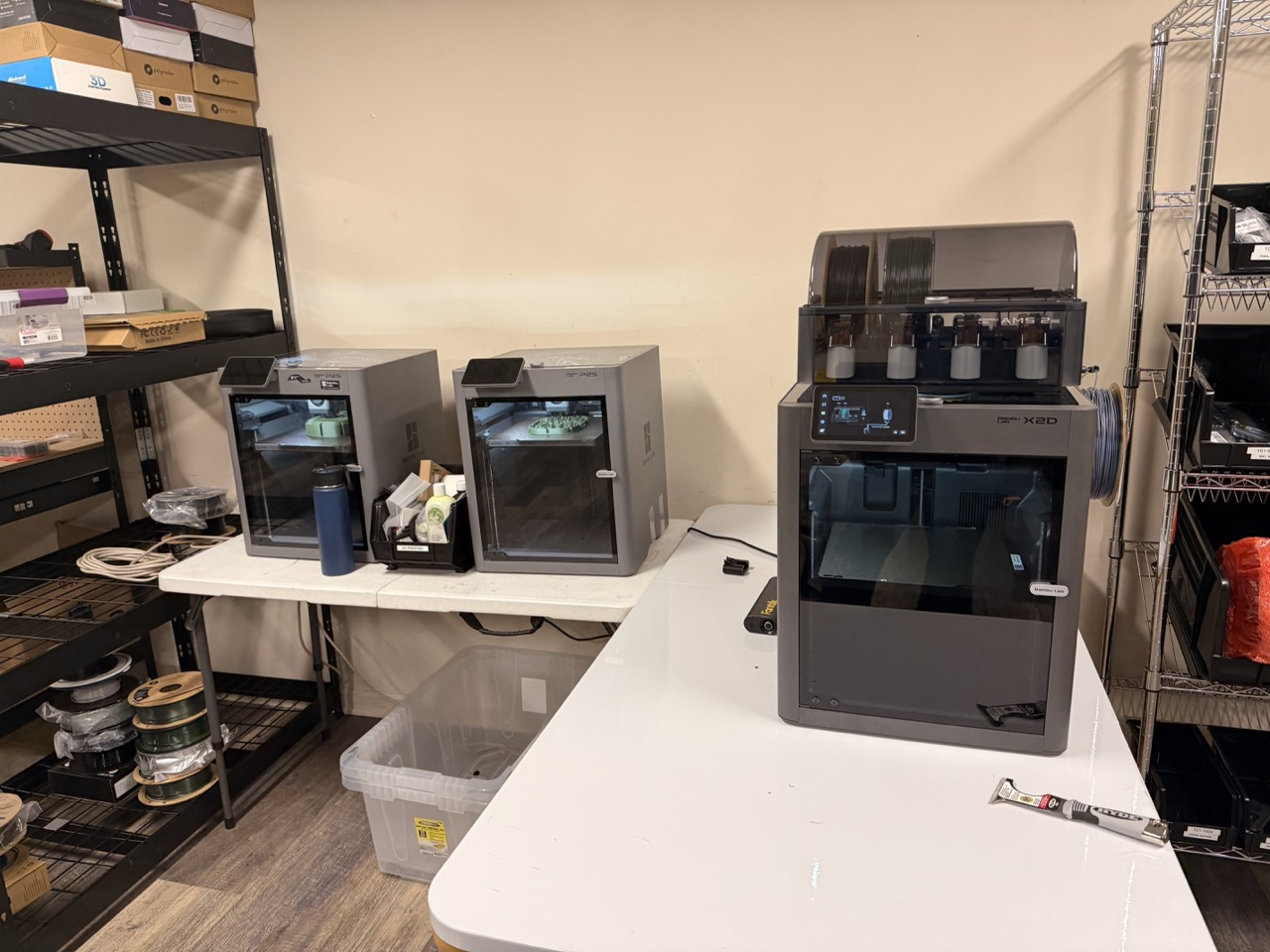
A bank of enclosed, multi-material 3D printers sits a few steps from the electronics bench. Enclosure revisions, lens and camera carriers, mounting brackets, and test fixtures are printed, fit-checked against real boards, and revised the same day instead of waiting weeks on an outside shop.
That loop is how the mount hardware in our deployment guide evolved: tree straps, pole mounts, and extension arms were all prototyped here and proven on trails before they became standard kit.
From engineering sample to field unit
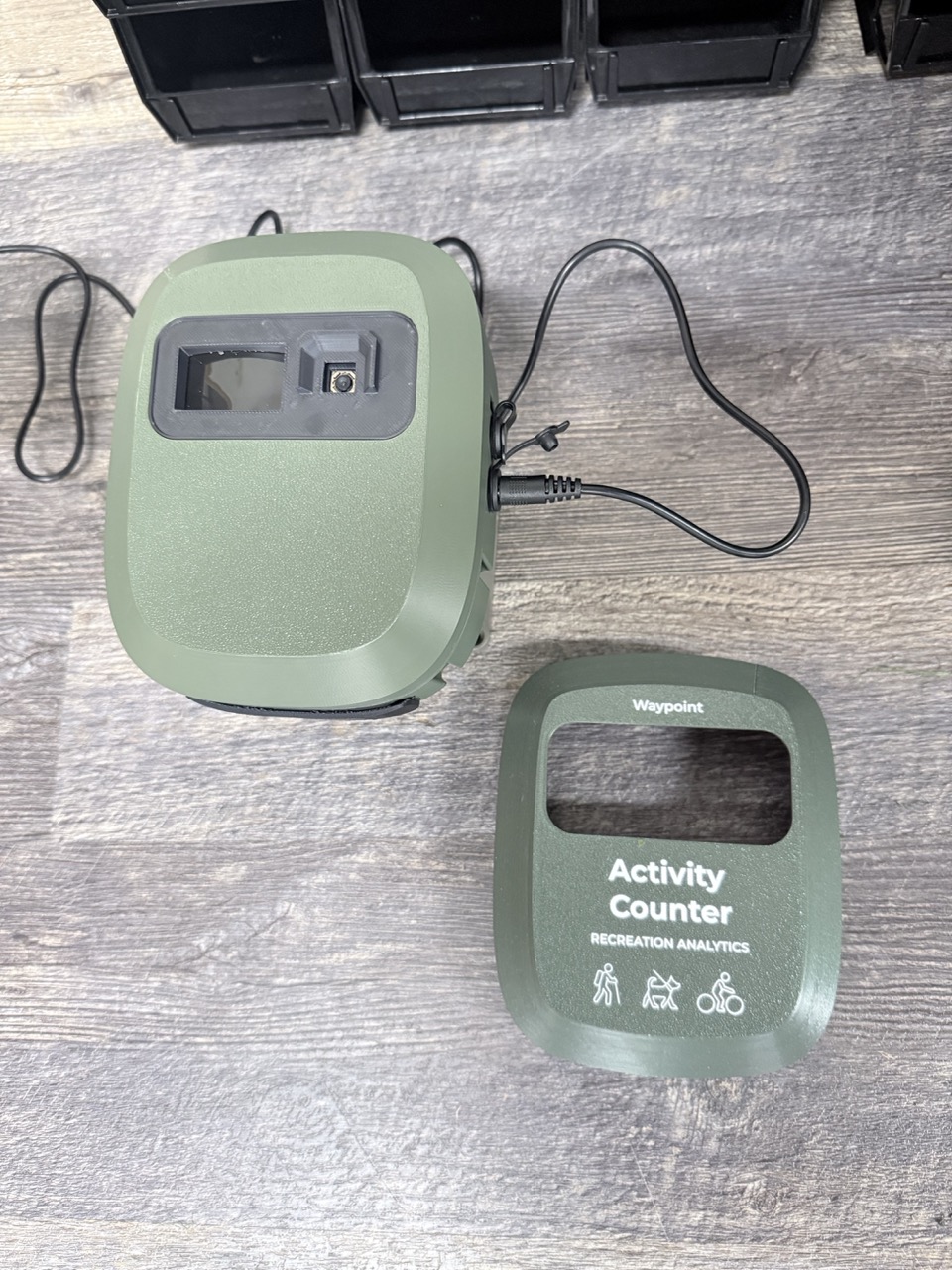
Every VisionAI One design change starts as an engineering sample on this floor. The enclosure body, camera window, and labeled front bezel are built as physical units, sealed, powered, and cycled before a revision is approved for deployment.
The bezel is part of the design brief, not an afterthought. VisionAI One is intentionally non-covert: the front face names Waypoint, states its purpose as an activity counter, and shows pictograms of what it measures. See how that supports our privacy and transparency approach, or review the finished product on the VisionAI One page.
Engineering team
Four engineers across mechanical, electrical, and software/firmware
Waypoint is an engineering company first. The product is a sealed outdoor computer with a camera, a cellular radio, a solar charge system, and a cloud vision pipeline behind it, and each of those pieces is owned in-house by an engineer whose discipline matches the problem. There is no outsourced hardware and no white-labeled camera.
Mechanical engineering
Weather-sealed enclosures, camera and lens positioning, solar panel mounting, and the tree, post, and pole mounting hardware used at every deployment.
Electrical engineering
Low-power circuit design, battery management, solar charging, cellular radio integration, and the power budget that keeps VisionAI One running through Minnesota winters.
Software and firmware
On-device capture and upload firmware, the cloud computer-vision pipeline, and the analytics dashboard that turns imagery into counts, activity types, and direction of travel.
Cellular engineering
Cellular by design, validated with F3 Wireless
Every Waypoint product is cellular. There is no Wi-Fi dependency, no SD card to retrieve, and no site visit required to get data. That decision puts the radio at the center of the design, and a radio inside a sealed enclosure mounted to a tree in a river valley is a hard RF problem.
To get it right, Waypoint works with F3 Wireless, a Minneapolis-based wireless engineering firm and one of the top RF consulting groups in the Midwest. F3 specializes in cellular and IoT product design, custom antenna development, and carrier certification, with a team of RF engineers who have shipped connected devices across medical, industrial, and asset-tracking markets.
The result is a camera that holds a connection in the wooded, low-signal locations where recreation actually happens. See how that connectivity fits into the full system on the autonomous operation page.
F3 Wireless scope of work
- RF design review of the VisionAI One cellular radio and board layout
- Antenna selection, tuning, and placement inside the sealed enclosure
- Over-the-air performance testing and carrier certification support
- Field validation of signal performance in wooded and low-coverage sites
Associations
Associations and memberships
Waypoint is an active member of the professional associations that serve parks and outdoor recreation agencies, and our founder has spent a decade inside the conservation community the product serves.
Waypoint Telemetry memberships



Founder: conservation and public lands
- Trout UnlimitedMember for nearly a decade, former Twin Cities chapter board member, and TU National business sponsor through TroutRoutes

- Backcountry Hunters & AnglersPublic lands advocate and supporter through TroutRoutes

- Entrepreneurs' Organization, MinnesotaFormer member of the Minnesota chapter's peer network of founders

Proven in the field, not just the lab
Waypoint cameras have run through multiple seasons with park districts, transportation agencies, and municipalities, and the detection pipeline has been validated in published studies. The pages below show the evidence behind the claims on this site.
Field deployments
Multi-season installations with park districts and municipalities.
Validation studies
Detection robustness, noise filtering, and directionality analysis.
Technology overview
How the camera, cellular link, and computer vision fit together.
VisionAI One
The product page for the camera designed and built in Bloomington.
Talk to the engineers who build it
Questions about site suitability, cellular coverage, or a pilot go straight to the team in Bloomington. Bloomington, MN