
Waypoint Research · Validation Report
Validating Vision-Based Trail Counting in Real-World Conditions
Published October 2026 · Waypoint Telemetry Engineering
Waypoint tested VisionAI One with a 120° wide-angle lens across real multi-use trail and path conditions to measure how distance, position in the frame, lighting, and trail-user type affect detection performance.
- Study type
- Field validation
- Application
- Multi-use trails and paths
- Hardware
- VisionAI One, 120° wide-angle lens
- Environment
- Outdoor, uncontrolled public trail traffic
- Frames analyzed
- 302 full-resolution frames (1600 × 1200)
- Objective
- Validate detection performance across representative deployment conditions
01 — Research Question
Research question
A trail counter is only useful if its counts can be defended. For a vision-based counter, that depends on whether the sensor can reliably see and classify every trail user who passes through its field of view — the person walking a dog right in front of the camera, the cyclist crossing at the far edge of the scene, and the group of three walking side by side.
This study asked: across the distances, positions, lighting conditions, and user types a typical trail installation actually encounters, does VisionAI One detect and classify trail users reliably enough to produce defensible counts?
02 — Methodology
Methodology
VisionAI One units fitted with a 120° wide-angle lens were mounted beside active multi-use paths and captured frames of uncontrolled public traffic over multiple days, under clear sun, overcast skies, backlit afternoon light, and dusk.
Every frame was processed through the same production vision pipeline used in Waypoint deployments. That pipeline detects people, bicycles, vehicles, and animals; fuses riders with their bicycles or motorcycles; applies the size and shape gates that decide whether a detection becomes a counted passage; and estimates body pose and direction of travel.
Each frame was then reviewed with its detection overlay so that counted, discarded, and missed subjects could be inspected directly.
- Pedestrians, runners, and dog walkers
- Cyclists and motorized riders, including fast-moving passes
- Groups and multiple simultaneous trail users
- Near-field (close to the lens), mid-field, and far-field subjects
- Subjects at the center and at the edges of the 120° field of view
- Direct sun, overcast, backlit, and low-light scenes
03 — Test Setup
Test setup
Each camera was mounted beside the trail with its 120° field of view looking across the travel lane, so that users enter from one side of the frame and exit from the other. That geometry maximizes the time each subject spends in view and makes direction of travel unambiguous.
A wide-angle lens matters most at the extremes. Close to the camera, a narrow lens sees only a slice of a passing cyclist; at a distance, it covers only a short stretch of trail. The 120° lens keeps a subject in frame for longer at both ends of the range, which is what makes fast-moving users countable.
04 — Results
Results
>95%
Detection reliability
Trail users within 100 ft of the camera
100 ft
Validated range
Across a 120° horizontal field of view
120°
Field of view
Wide-angle lens, full frame analyzed
0.76
Mean detection confidence
Across all detections in the test set
What we found
Within 100 ft of the camera, VisionAI One detected trail users reliably across the full width of its 120° field of view, including subjects at the frame edges.
Fast-moving users were captured at both ends of the range. Cyclists crossing at a distance remained large enough in frame to be detected and fused with their bicycles, and riders passing close to the lens were still captured as they entered the edge of the frame — the two situations where narrow-field trail cameras and single-beam counters most often lose a pass.
Groups were separated into individual detections, and dogs were classified separately from the people walking them, so a group of three with a dog counts as three people and one dog rather than one event.
05 — Example Observations
What the sensor sees
Unedited frames from the test set with the pipeline's detections overlaid — the actual input, and what the system concluded. Faces are pixelated for privacy.
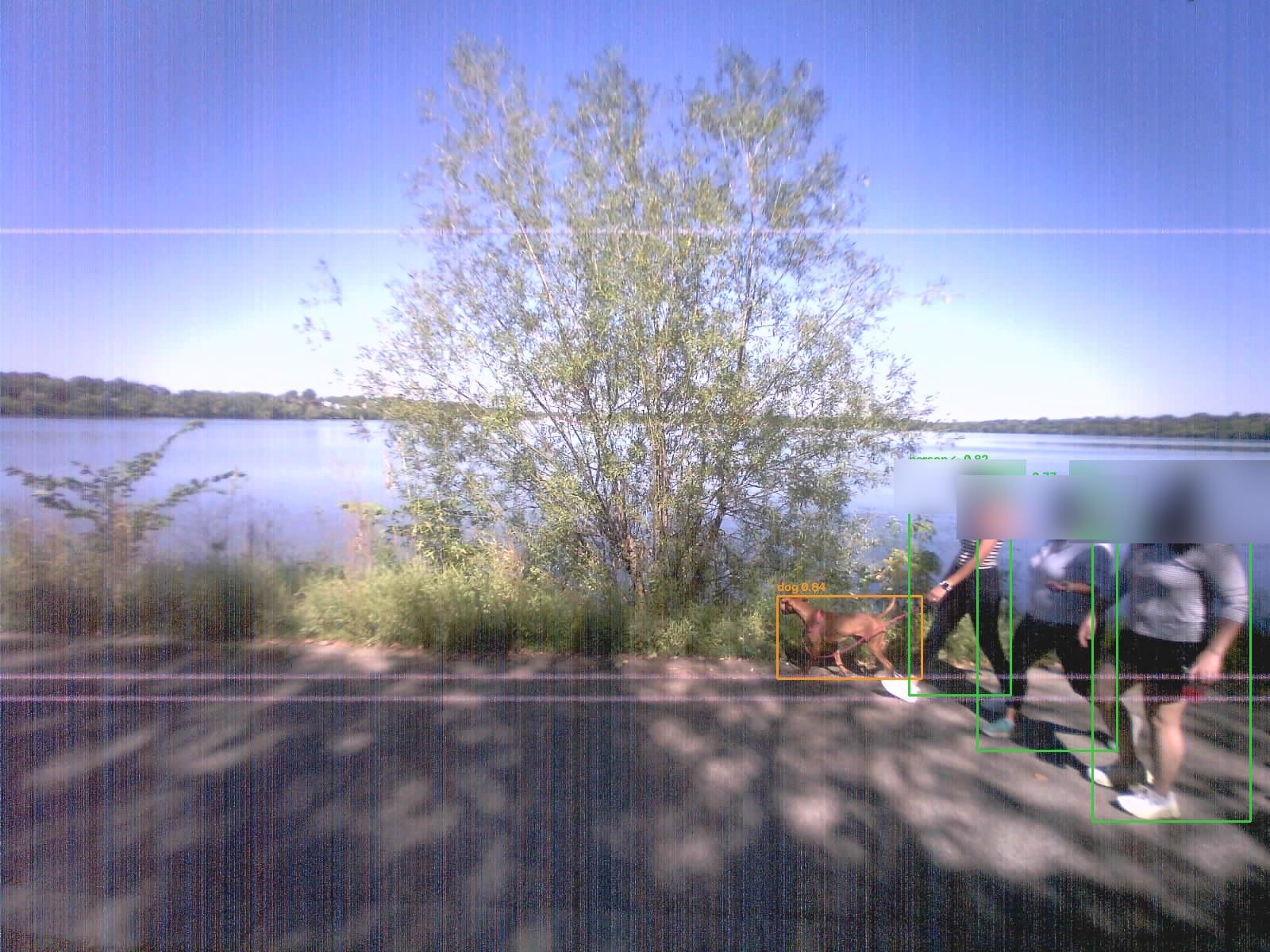
Group with a dog, near range
3 people and 1 dog detected as separate subjects
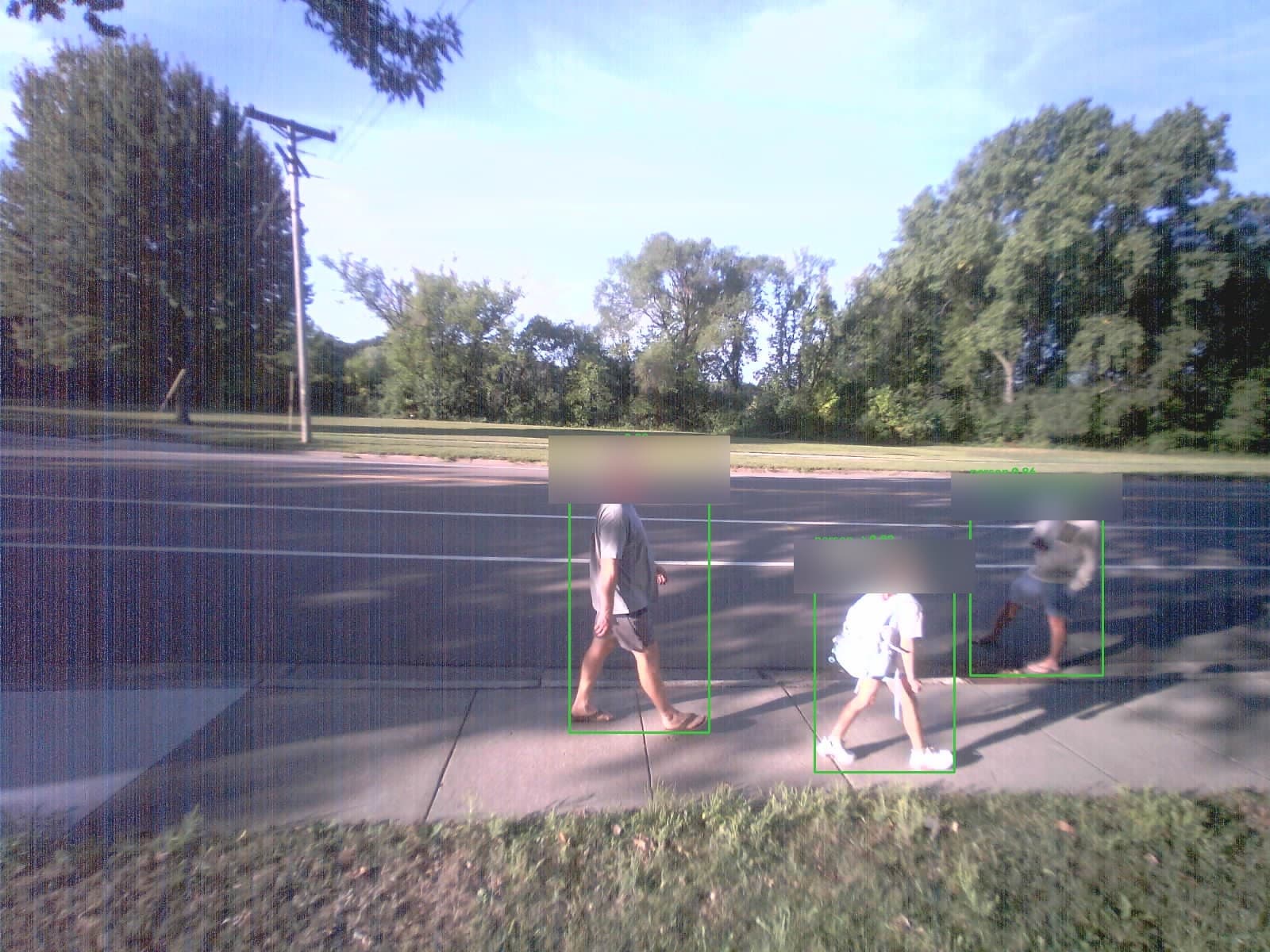
Three pedestrians, mid range
3 people detected and counted individually
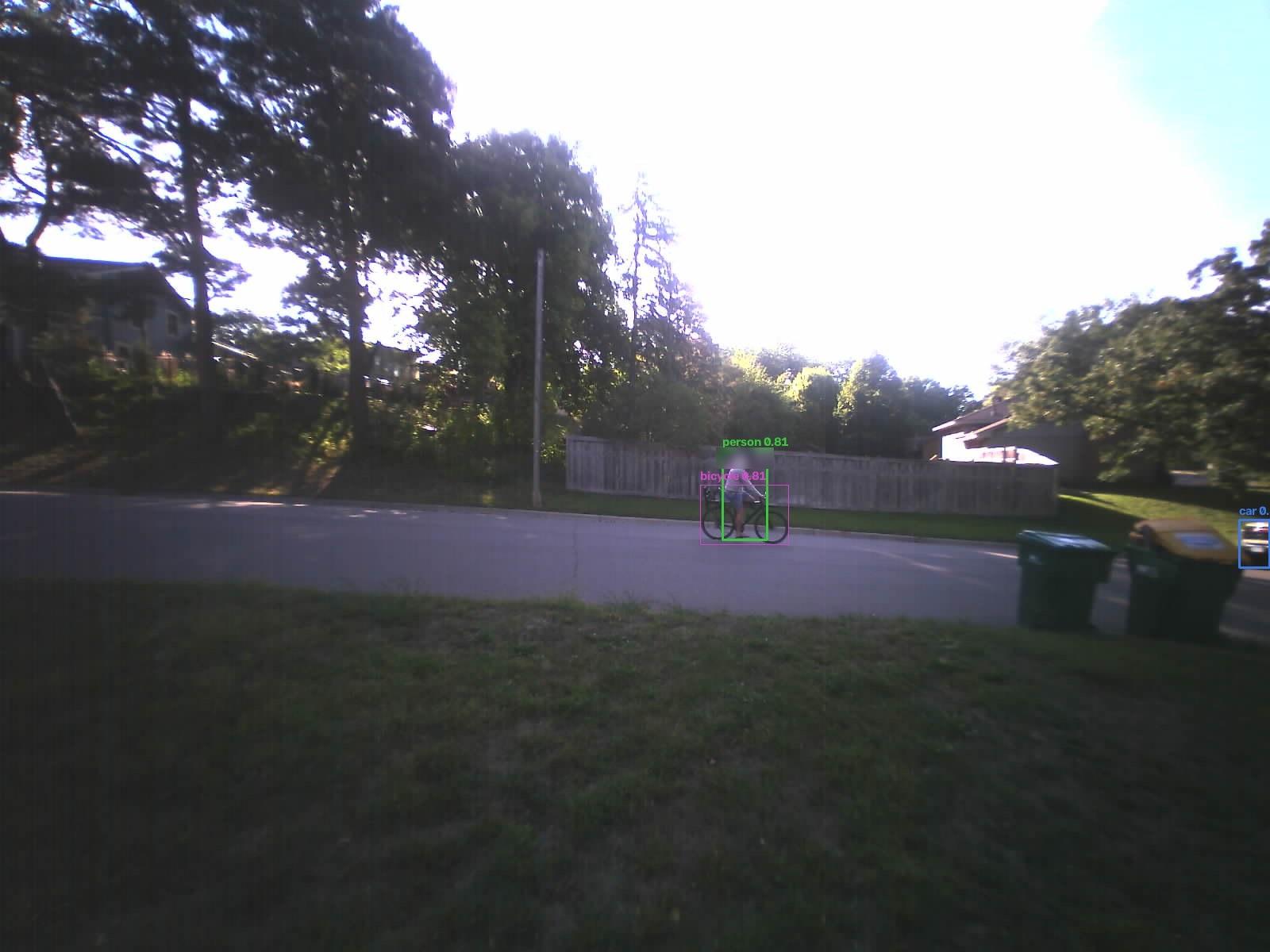
Cyclist, far range, backlit
Rider and bicycle detected and fused into one cyclist
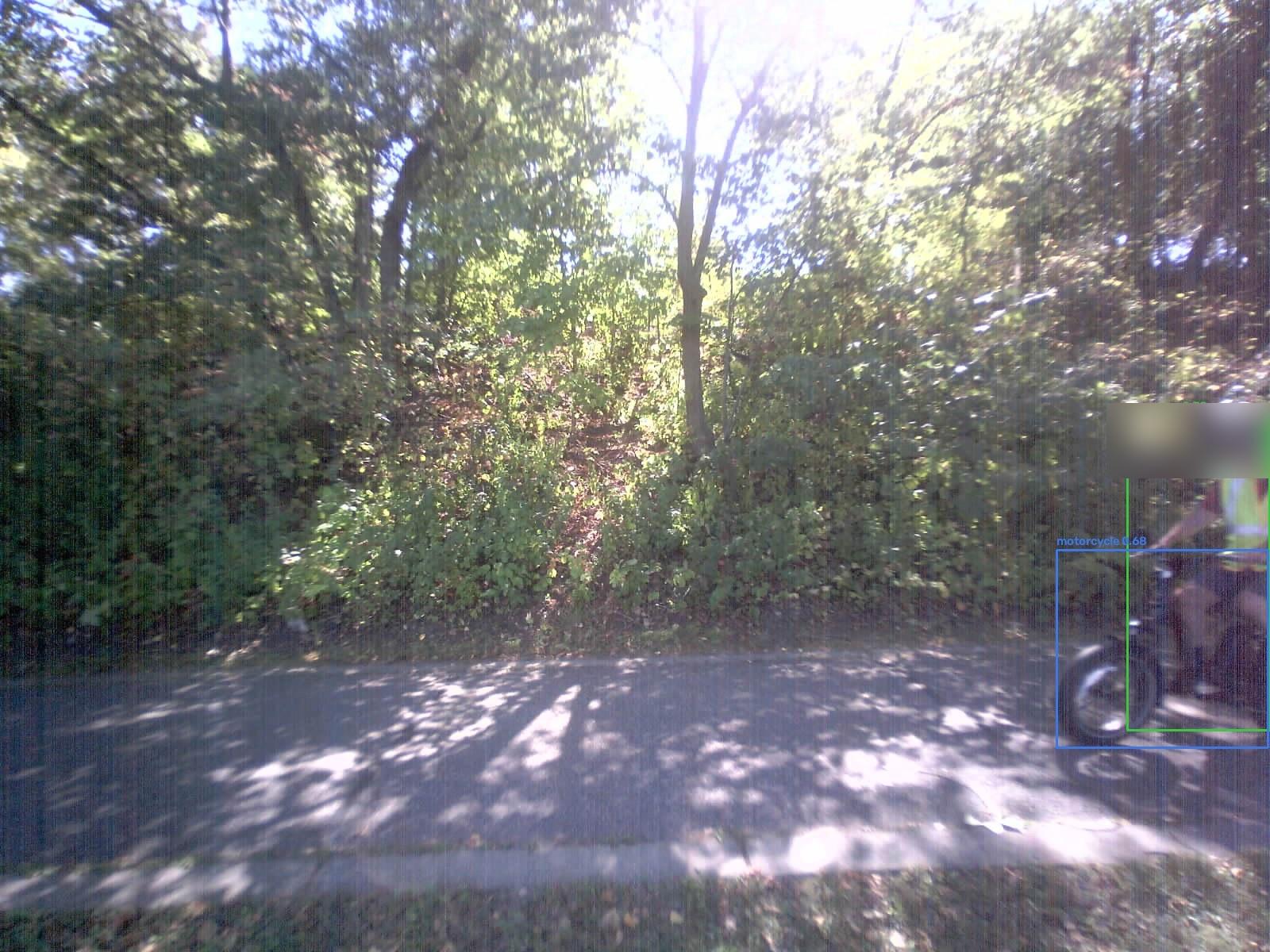
Fast rider entering the frame edge
Rider and motorcycle detected at the edge of the field of view
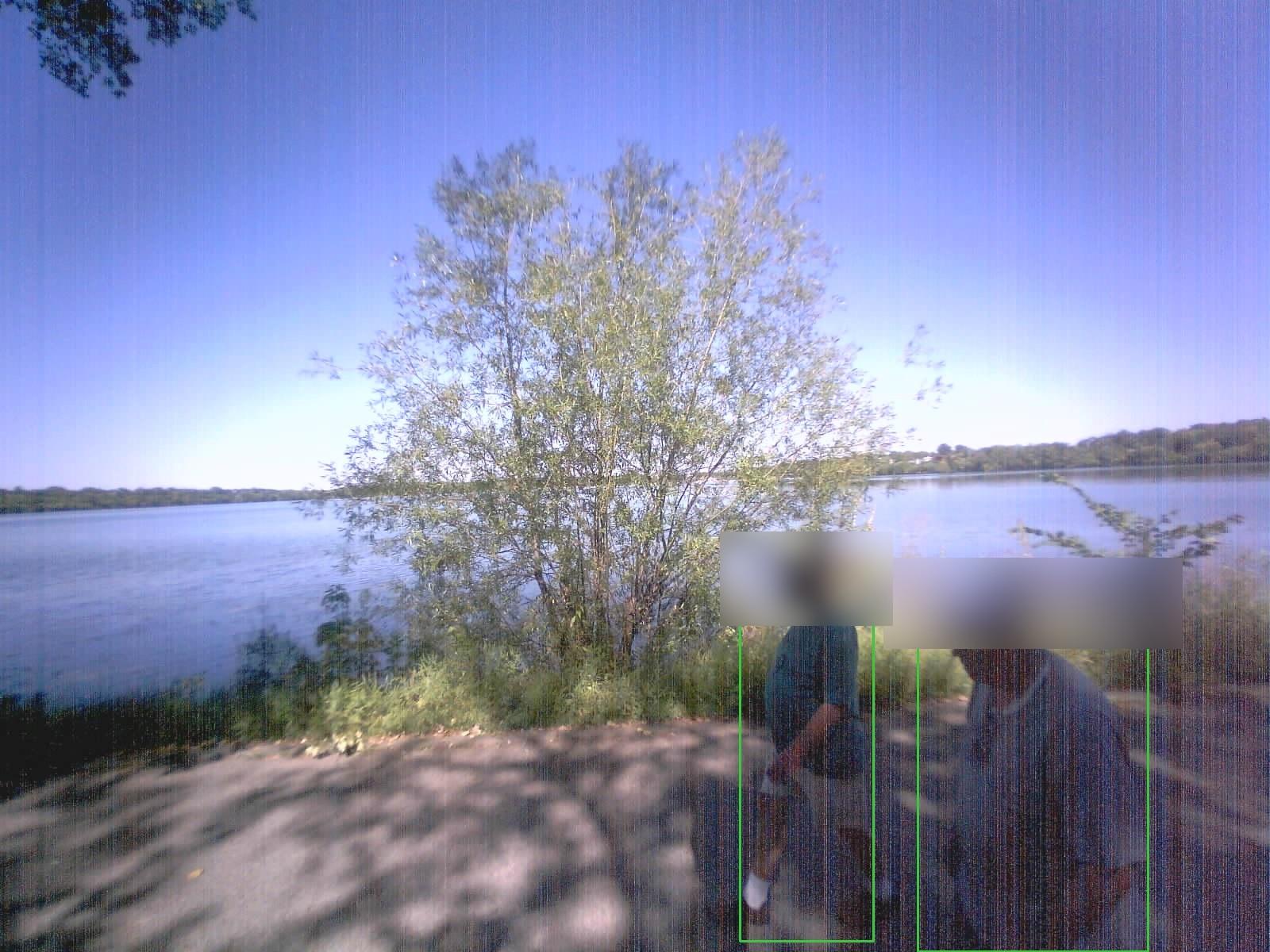
Two pedestrians, very close range
Both people detected despite partial framing
06 — Limitations
Where performance declined
Detection performance was strongest within 100 ft and declined beyond it. Subjects that appear smaller than the pipeline's minimum size threshold are intentionally not counted, because counting them reliably is not possible at that resolution — this is a deliberate trade against false positives.
Strong backlighting and blown-out sky lowered detection confidence in some frames, and very low light produced few usable frames. Seated or stationary people are not counted as passages, which is the intended behavior for a trail counter but means the system is not a crowd-occupancy tool on its own.
07 — Deployment Recommendations
From validation to installation guidelines
- Camera placement
- Mount beside the trail and aim across the travel lane, so users cross the frame rather than walking toward the lens.
- Viewing distance
- Keep the counted section of trail within 100 ft of the camera. Closer is better for classification detail such as helmets and gait.
- Lens selection
- Use the 120° wide-angle lens for multi-use trails with cyclists or other fast users; it keeps fast passes in frame long enough to count.
- Trail width
- One camera covers the full width of a typical shared-use path. Wide plazas or multi-lane corridors may need a second unit.
- Sun angle
- Avoid pointing directly into the afternoon sun. North-facing views reduce backlighting and keep confidence high.
- Mounting
- Mount at roughly head height or slightly above, clear of branches that move into the frame in wind.
Need defensible usage data?
See how these results translate into a deployment, or talk with our team about your site.